You Checked Credit Karma and Saw 650. Your Mortgage Banker Pulled Your Score and Saw 560. Here's Why — and What to Do Right Now.
First-Time Home Buyer Series : Part 1
By Vince LaMaida, Alec LaMaida & Tom LaMaida
Imagine this. You've been doing everything right. You've been watching your Credit Karma score climb. It says 650. You feel ready. You call a mortgage banker, they pull your credit — and then there's a pause on the phone you'll never forget. "I'm showing a 560 on your mortgage report."
That gut-punch is real. We've seen it happen dozens of times. A buyer walks in confident and walks out confused, embarrassed, and wondering how they could have been so wrong. The hard truth? They weren't wrong to check. They just checked the wrong score.
This is Part 1 of our First-Time Home Buyer Series — and we're starting here, with credit, because nothing else matters until you understand this one distinction. Not down payments. Not interest rates. Not neighborhoods. Your credit score is the front door to every conversation in real estate. If it's not right, everything else stalls.
Why Credit Karma Is Not Your Mortgage Score
Credit Karma is a fantastic free tool. It helps millions of Americans get in the habit of monitoring their credit — and that habit matters. But Credit Karma uses a scoring model called VantageScore 3.0. Mortgage lenders do not use VantageScore. They use FICO — and not just any FICO score. They pull a specific, older version called FICO Score 2, 4, and 5, depending on the credit bureau.
Here's the problem: VantageScore and FICO weight your credit history differently. They treat medical debt differently. They handle recent late payments differently. Collections, thin files, authorized user accounts — they all calculate differently between the two models. The result? Gaps of 50, 80, even 100+ points between what you see on Credit Karma and what your mortgage banker sees.
| Factor | Credit Karma (VantageScore) | Mortgage FICO Score |
|---|---|---|
| Cost | Free | Paid ($19.95–$39.95/month via myFICO) |
| Model used | VantageScore 3.0 | FICO 2, 4, 5 (mortgage-specific) |
| Used by lenders | No — educational only | Yes — every major mortgage lender |
| Score accuracy for home buying | Can differ by 50–100+ points | Exact score your banker sees |
| Dispute tools | Basic | Detailed — includes simulator and action plan |
The Only Score That Matters for Home Buying: myFICO
If you are serious about buying a home, there is one website you need to know: myFICO.com.
myFICO is owned and operated by Fair Isaac Corporation — the original creator of the FICO score. When you pull your report through myFICO, you are seeing the same score your mortgage banker will see. Not an approximation. The actual number.
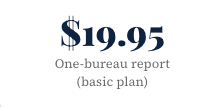
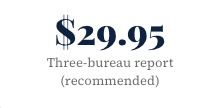
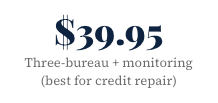
For home buying purposes, we recommend at minimum the three-bureau report. Mortgage lenders pull all three bureaus — Experian, Equifax, and TransUnion — and use the middle score. You need to see all three to know where you actually stand.
"The mortgage industry doesn't grade on a curve. Your FICO score is your FICO score. Know it before the lender does."
— Tom LaMaida, Mortgage Professional | Union Home Mortgage | NMLS #1879133
Once You Have Your Real Score — Here's What We Focus On Next
Getting your myFICO report is step one. What you do with that information is where the real work begins. We're going to dedicate an entire post to credit repair strategy — including exactly which accounts to pay down first, how to dispute errors, and what timeline to expect. But here are the foundational principles you need to understand right now:
-
Attack your credit utilization first
Credit utilization — how much of your available revolving credit you're using — accounts for 30% of your FICO score. Getting each card below 30% of its limit (ideally below 10%) is the fastest way to lift your number. This can show results in a single billing cycle.
-
Do not open new accounts or close old ones
Both actions can hurt your score in the short term. New accounts lower your average age of credit. Closing old accounts reduces your available credit limit and spikes your utilization ratio. Stay steady once you're in repair mode.
-
Give yourself 6–12 months
Real score improvements take time. If you're sitting at a 560 today, a disciplined 6–12 month window can get you to a 620 or higher — and the difference between a 619 and a 620 on a conventional loan can be tens of thousands of dollars in qualification thresholds and rate differences over 30 years.
Heads up: In our next post in this series, we're going deep on credit repair — the specific playbook Tom uses with clients who come in under 620 and need a path to qualification. Stay tuned, or sign up below to get it delivered straight to you.
The Wealth Move You Should Make Today — Especially If You Have a 401(k)
Home buying is about more than getting a roof over your head. Done right, it is the first step in a wealth-building strategy that compounds over your lifetime. While you're working on your credit, there is one financial move that many first-time buyers are leaving money on the table with right now — and it costs them nothing extra to fix.
If your employer offers a 401(k) match and you are not contributing enough to capture the full match — you are turning down free money.
Most employers offer a match of 3% to 6% of your salary. If you earn $60,000 and your employer matches 4% — that's $2,400 per year that they will deposit into your retirement account if you contribute the same. If you're only contributing 1% or 2%, you're leaving real dollars on the table every single pay period.
The principle we teach: Before you build your down payment, before you invest in anything else — make sure you are capturing every dollar of your employer match. That match is an instant 50%–100% return on your contribution, depending on your employer's formula. No investment in the world reliably offers that.
Max Out Your Match — Then Invest the Rest
The 2025 401(k) contribution limit is $23,500 per year (or $31,000 if you're 50 or older). You don't need to hit the max to win here. You just need to hit the minimum that unlocks your full employer match. Once you've done that, we also teach a parallel strategy where every week you're automatically investing a small, fixed amount into an S&P 500 index fund through a Roth IRA. Small, automated, consistent — and it starts building wealth in parallel while you work toward homeownership.
We cover the full wealth-building strategy — 401(k) ladder, Roth IRA setup, emergency fund structure, and down payment investing — in our free guide. Sign up below and we'll send it directly to you.
Part 2: The Credit Repair Playbook — How to Go From 560 to 620 in 90 Days
In Part 2, Tom LaMaida walks through the exact steps he uses with clients who need to rebuild their credit before qualifying for a mortgage — including which debts to pay first, how to write a dispute letter that actually works, and the scoring simulator tool that shows your before-and-after.




Serving first-time homebuyers across Florida - thelamaidagroup.com
Disclaimer: This blog is for educational purposes only. We have no affiliation with myFICO, myFICO pricing is subject to change — verify current pricing at myfico.com. Consult a licensed mortgage professional before making financial decisions. Tom LaMaida, NMLS #1879133, is a licensed mortgage professional with Union Home Mortgage NMLS #2229, NMLS Consumer Access website: www.