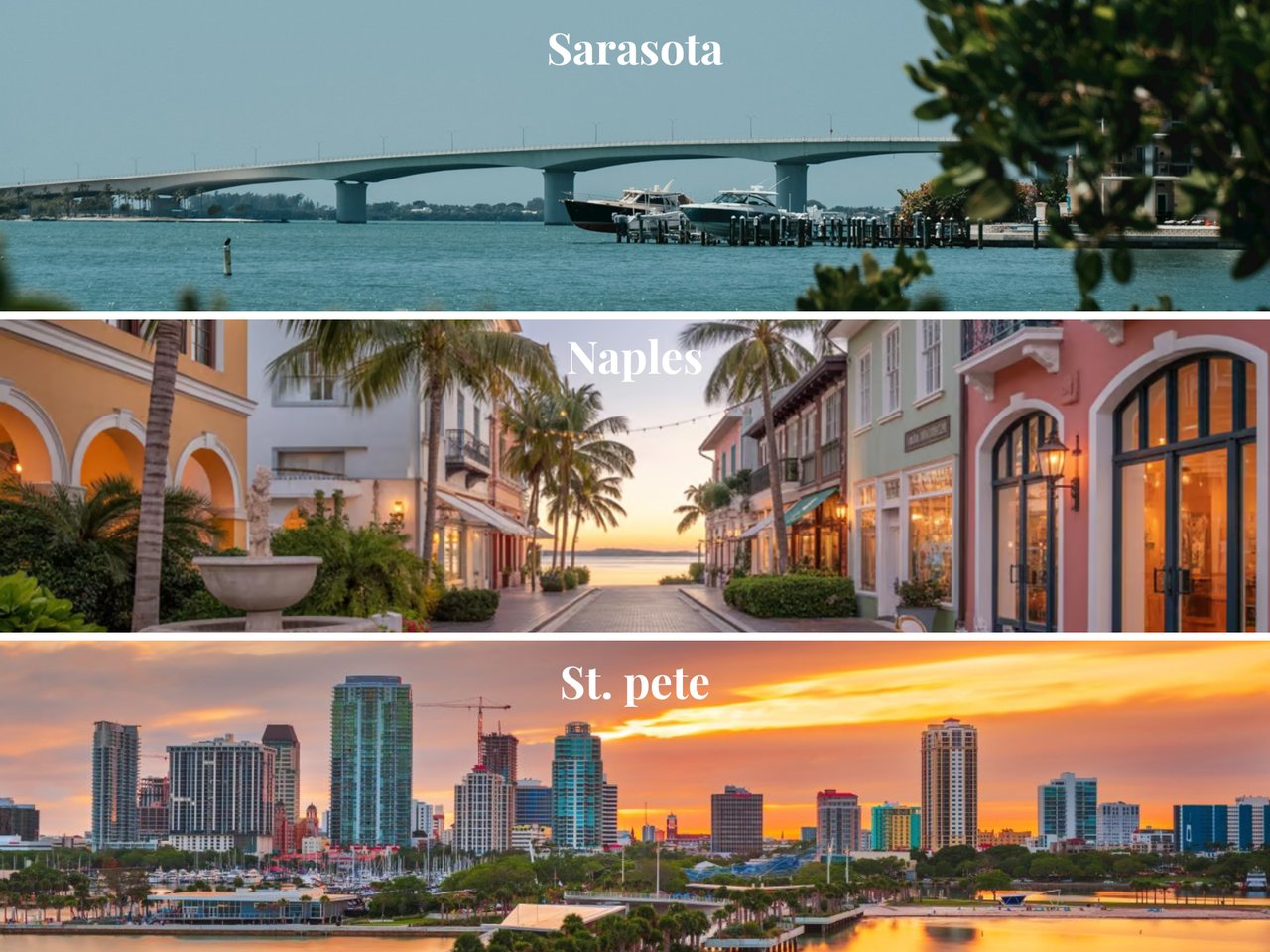
Community Spotlight
West of the Trail: Sarasota's Most Coveted Address
Canopy streets, bayfront estates, walkable village dining, and a character that no master-planned community can replicate.
In Sarasota real estate, few phrases carry as much weight as "West of the Trail." It's shorthand for a specific kind of living — established, walkable, architecturally distinctive, and grounded in decades of community character that newer developments simply cannot manufacture. For buyers who want the Gulf Coast lifestyle without giving up urban convenience, and for sellers sitting on some of the most irreplaceable land in the region, understanding what West of the Trail is — and what makes it different — is essential. This is that guide.
Where is West of the Trail?
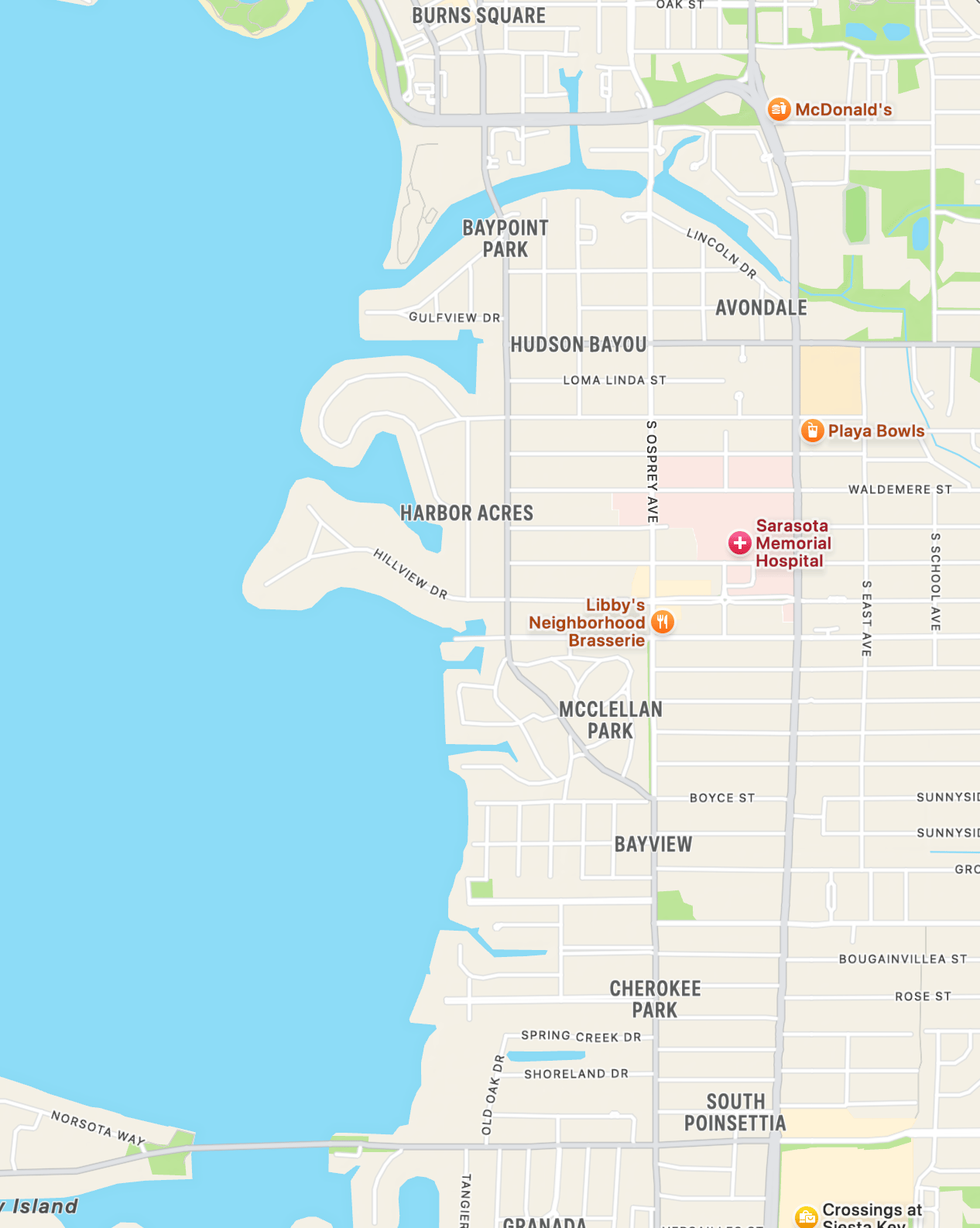
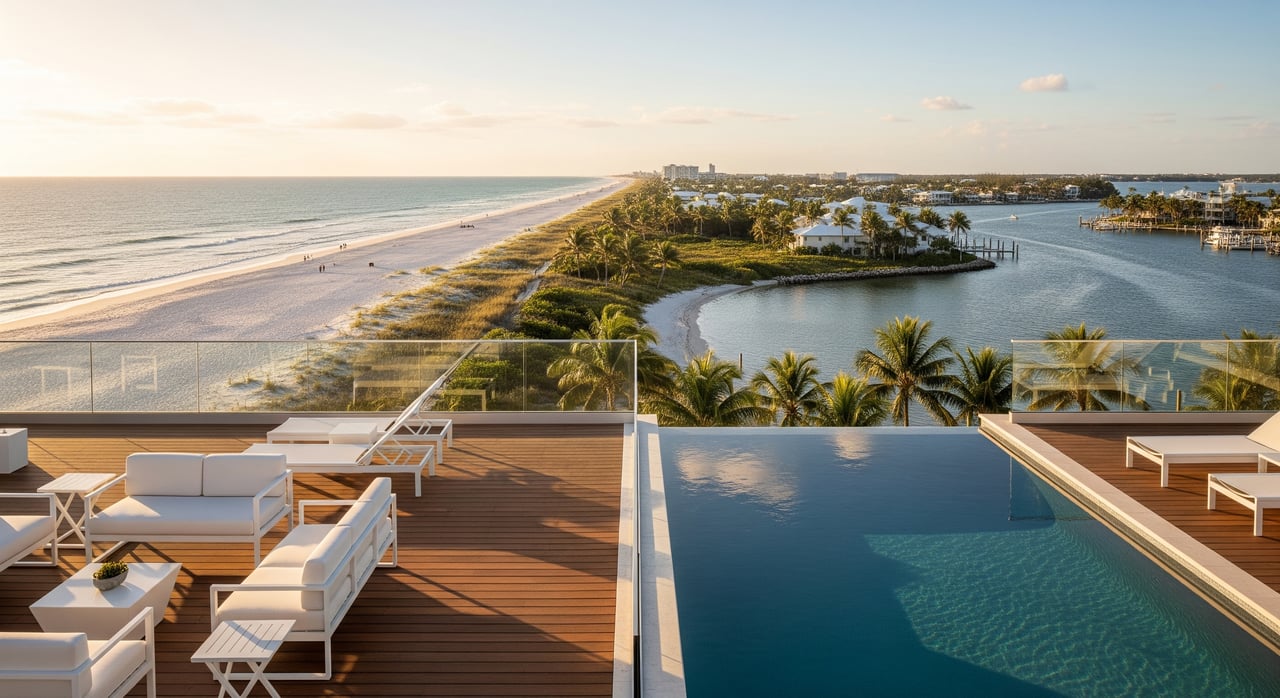
West of the Trail refers to the collection of established residential neighborhoods situated west of US-41 (the Tamiami Trail) and east of Sarasota Bay, running roughly from Hudson Bayou in the north down through the historic luxury corridor to Phillippi Estate Park in the south. Osprey Avenue runs through the heart of the area, parallel to the bay, and Southside Village — the neighborhood's commercial epicenter — sits at Osprey Avenue and Hillview Street.
The area encompasses approximately 15 named residential neighborhoods across a few square miles of some of the most sought-after land in Southwest Florida. Downtown Sarasota is minutes away. Siesta Key is a short drive south. Sarasota Memorial Hospital sits at the neighborhood's eastern edge. And Selby Botanical Gardens sits right at the waterfront — neighbors in the truest sense.
The real estate market in 2026
West of the Trail competes at the top of the Sarasota market — and the 2026 picture is nuanced. While the broader Sarasota County single-family market saw median prices decline approximately 6% in 2025, West of the Trail has outperformed those county-wide averages. Its combination of walkability, bayfront proximity, architectural significance, and fixed supply creates structural insulation against the kind of correction that hits less differentiated inventory harder.
The ultra-luxury segment — particularly $3M+ bayfront estates in Harbor Acres — remains highly active. A home at 1204 Hillview Drive in Harbor Acres closed July 2, 2026 at $17 million, making it the highest-priced residential sale on Sarasota's mainland so far this year. At the entry and mid-levels, buyers have more room to negotiate than they did during the 2021–2022 peak, with average days on market around 75 and sellers receiving approximately 92% of original list prices.
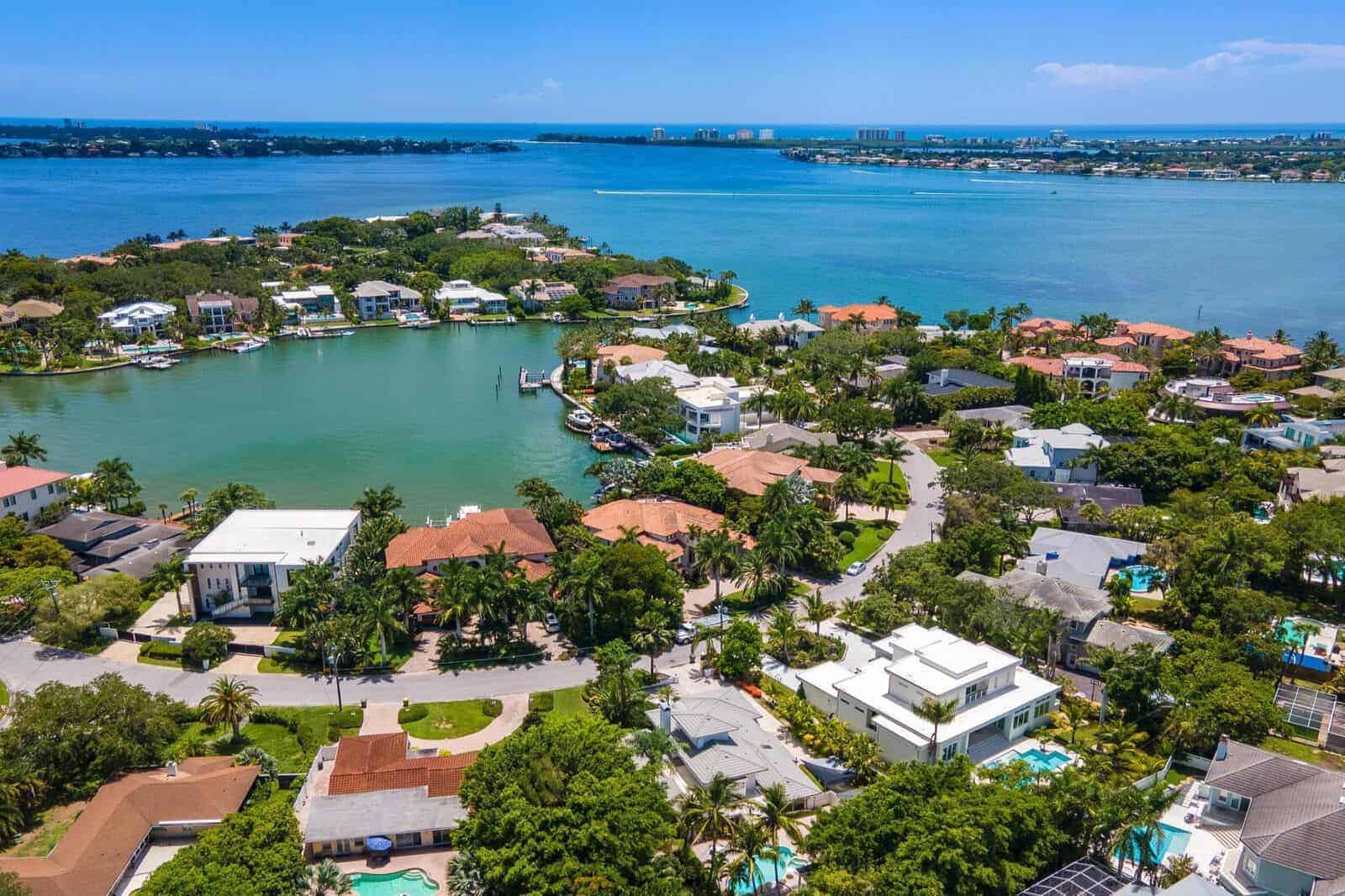
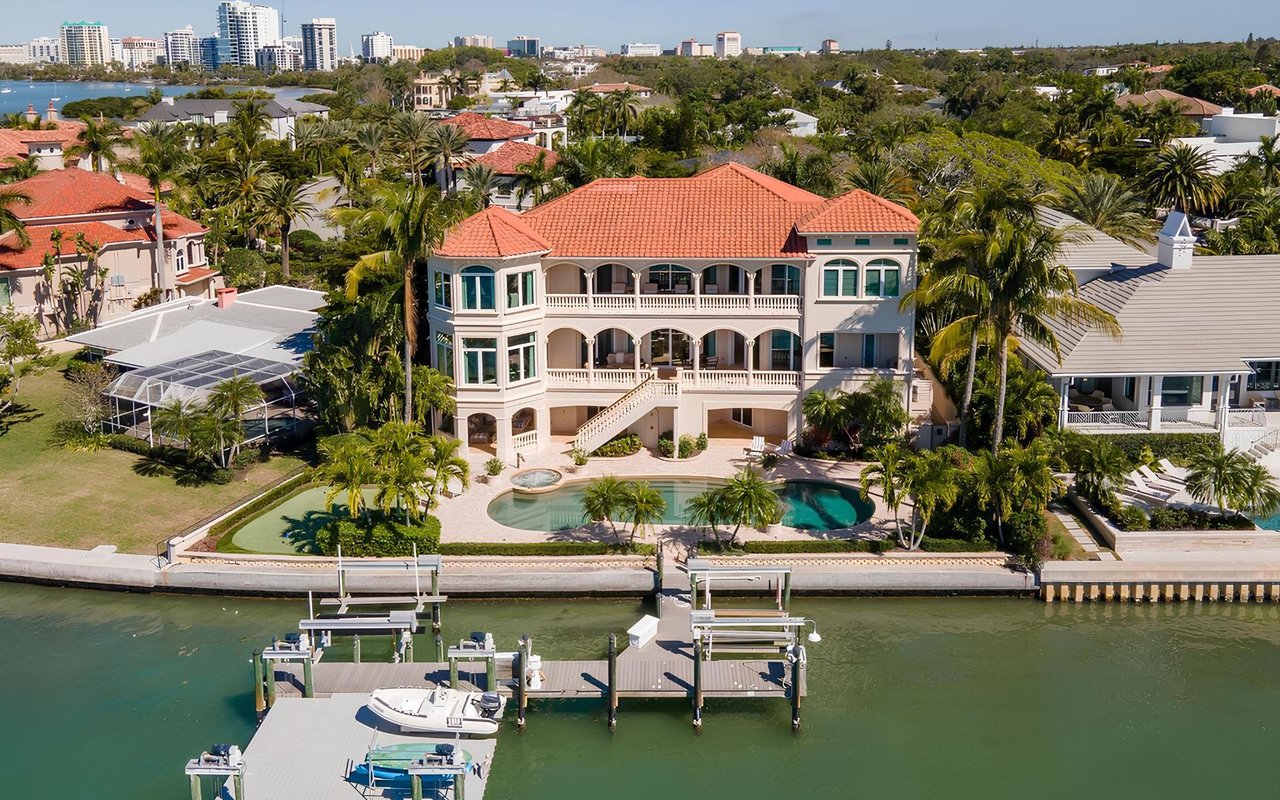
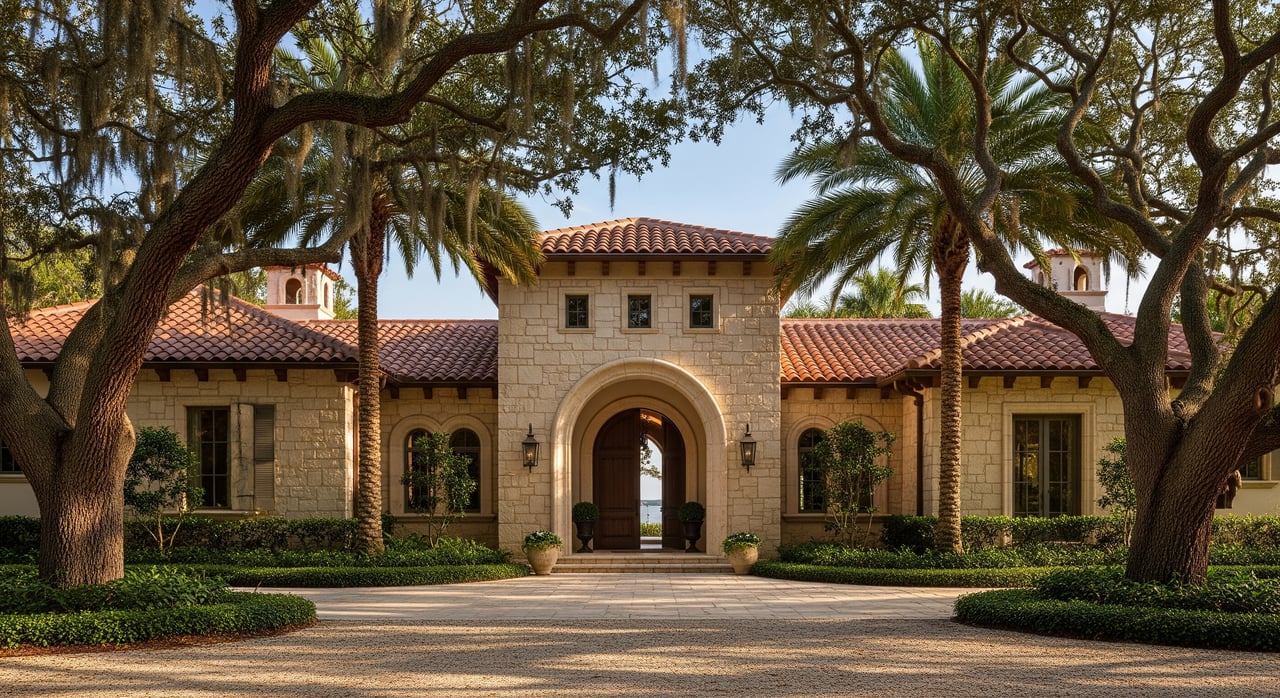
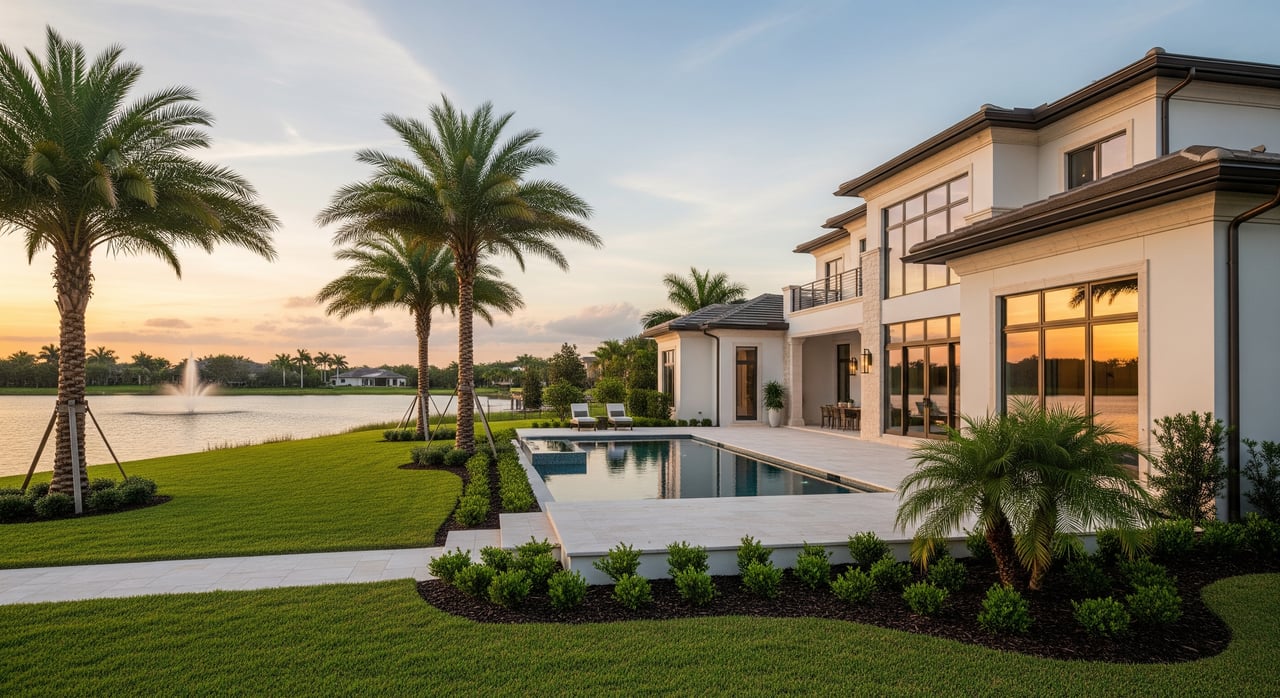
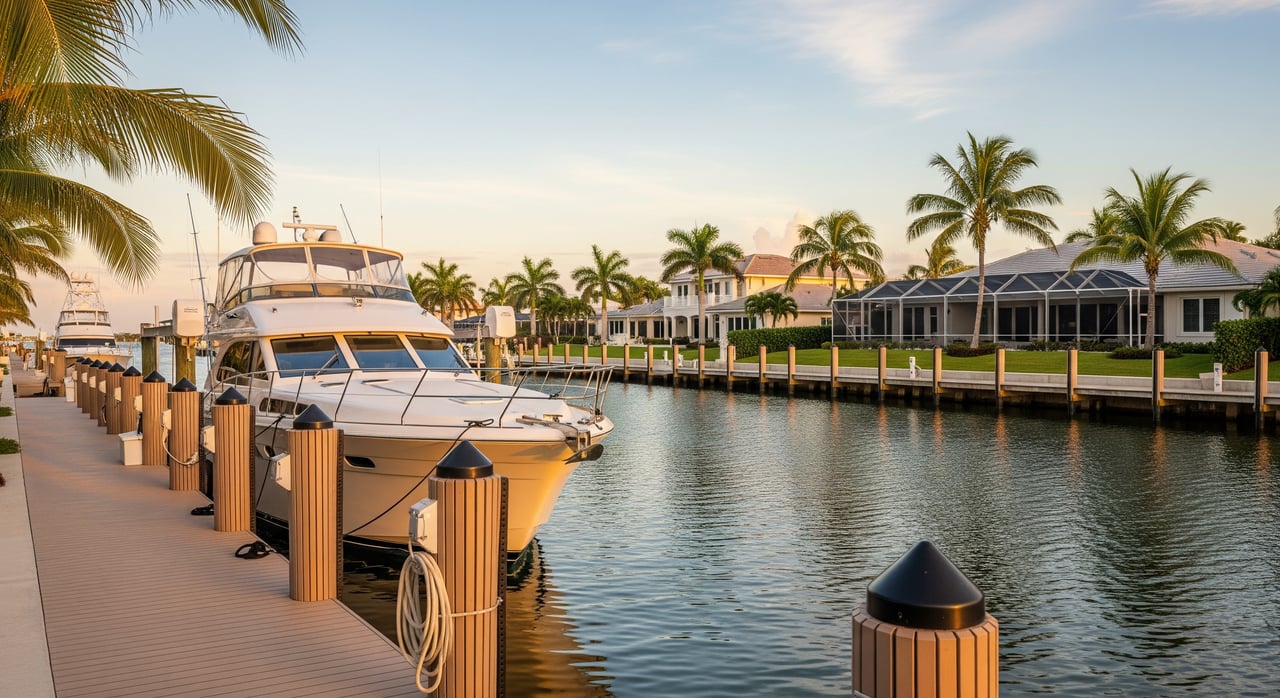
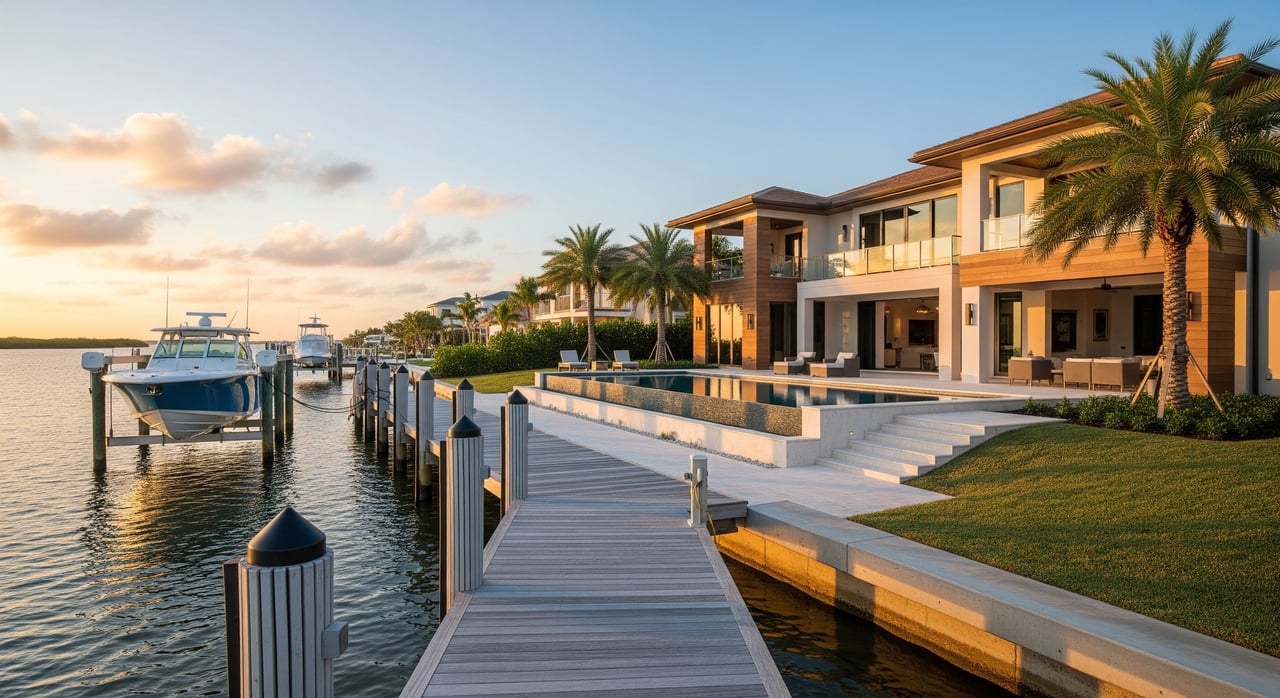
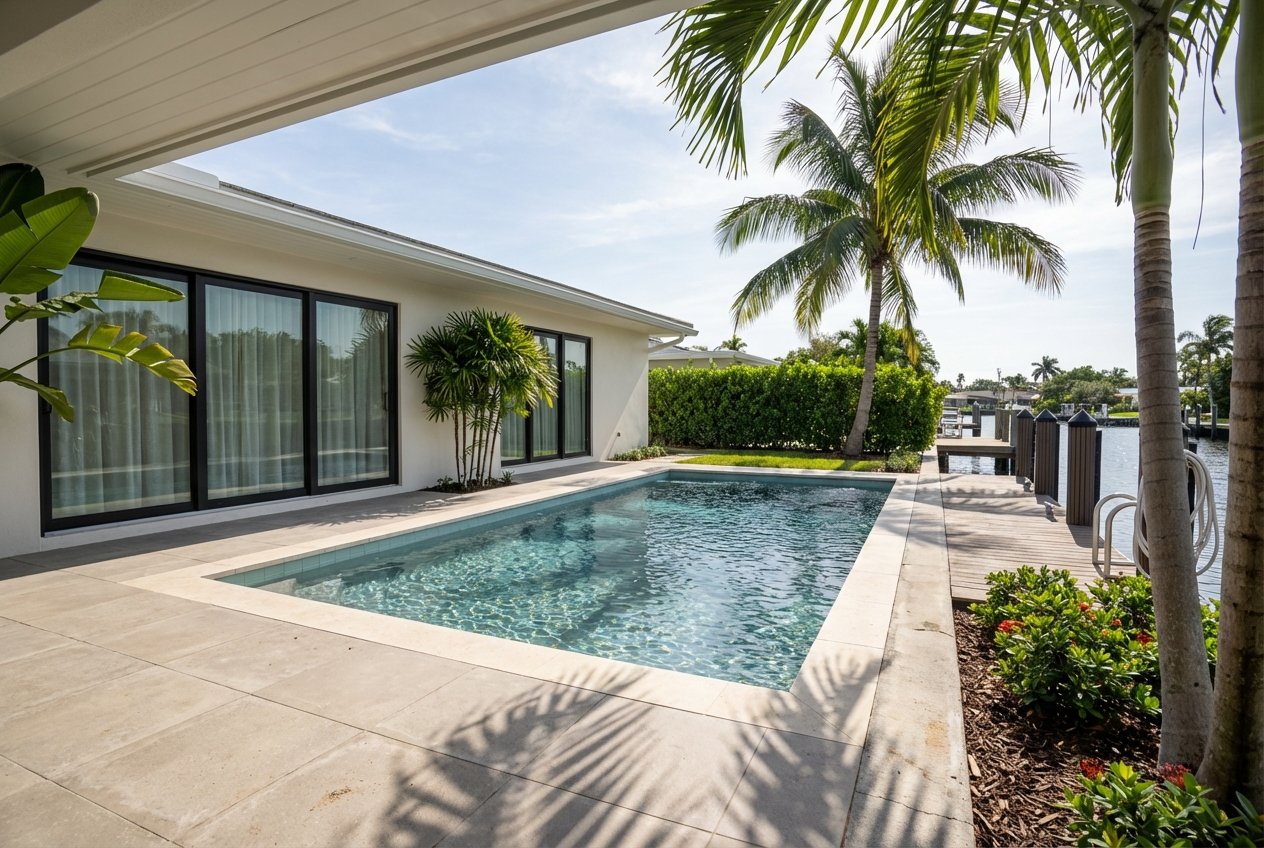
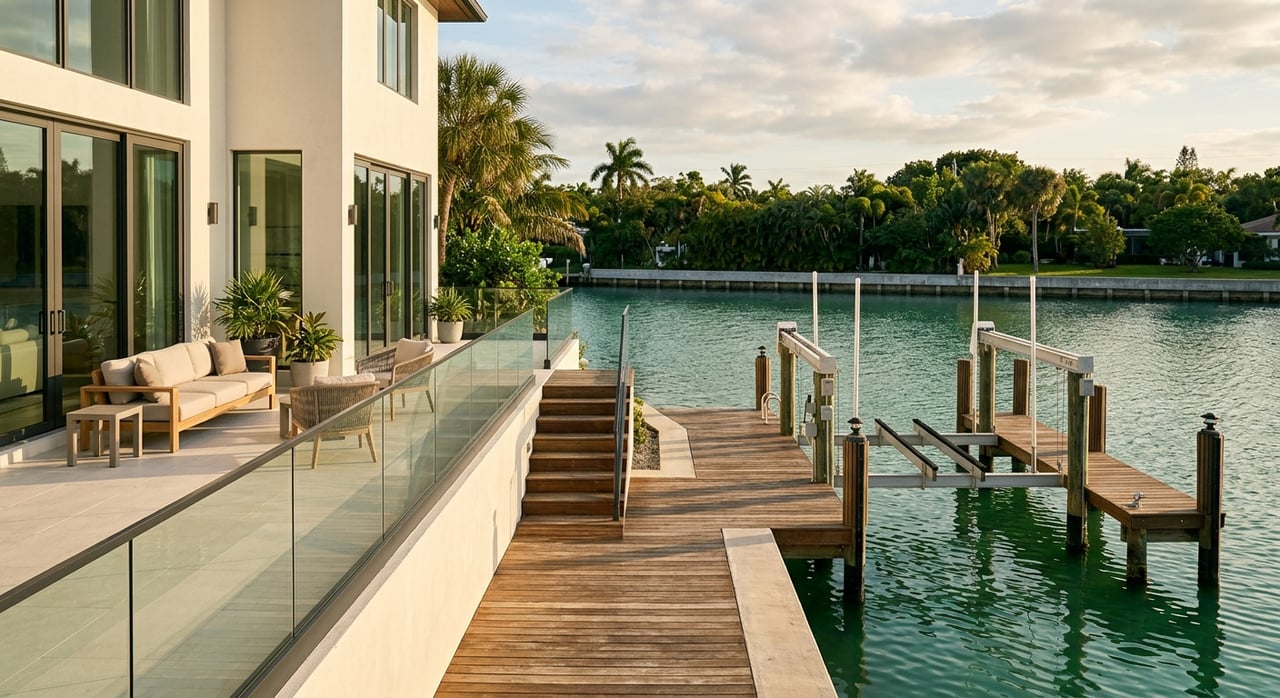
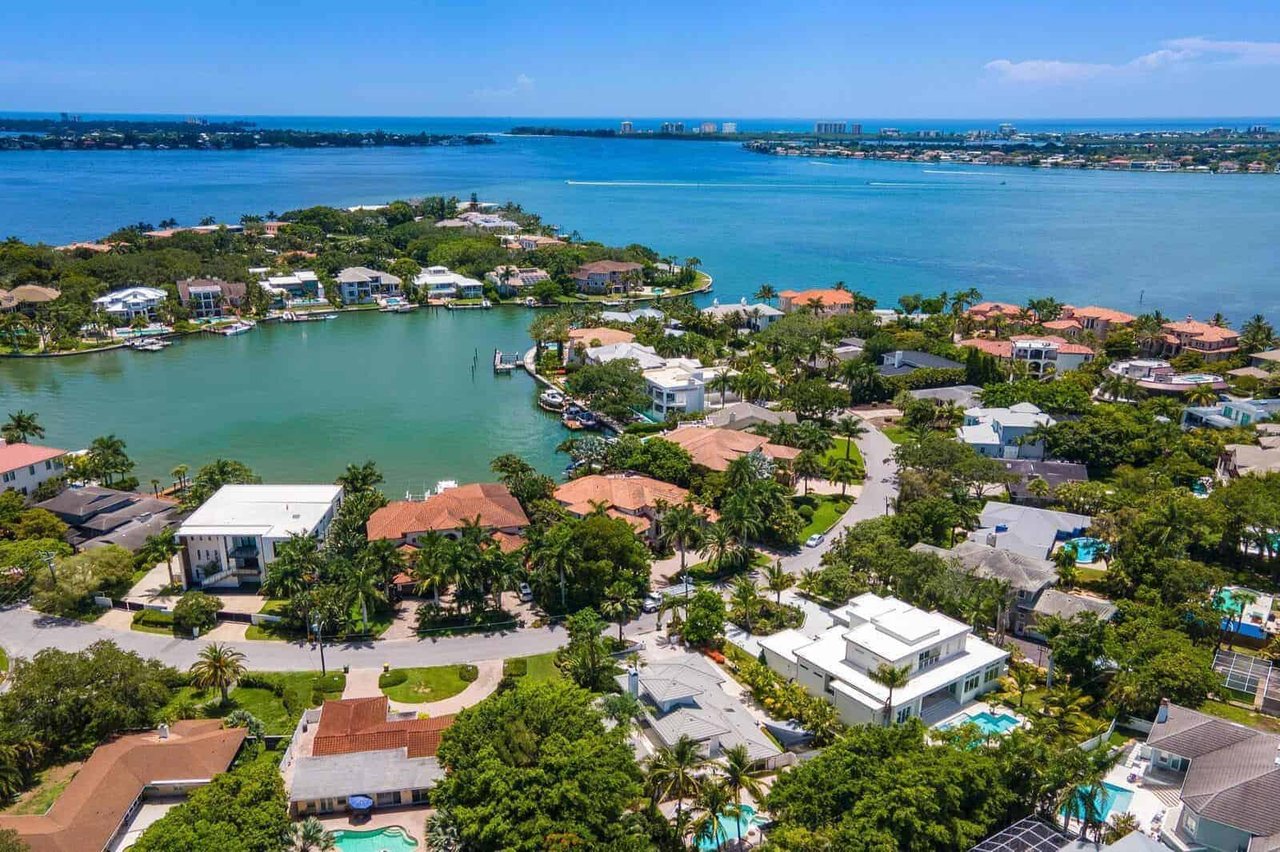
Harbor Acres is, by most measures, the most prestigious mainland neighborhood in Sarasota. Located just south of downtown off Osprey Avenue, it's a 166-property enclave defined by deep-water canals with no bridges to the bay, generous estate-sized lots, and a streetscape of mature oaks that frames some of the most significant residential architecture on the Gulf Coast.
The neighborhood's appeal is rooted in scarcity. Bayfront and deep-water canal lots of this size, this close to downtown Sarasota, simply don't exist anywhere else on the mainland. That constraint keeps demand consistent even when broader market conditions soften. As of mid-2026, the Harbor Acres market is among the most active ultra-luxury corridors in the region — with three sales above $9.5 million already recorded this year, including the $17 million Hillview Drive close in July.
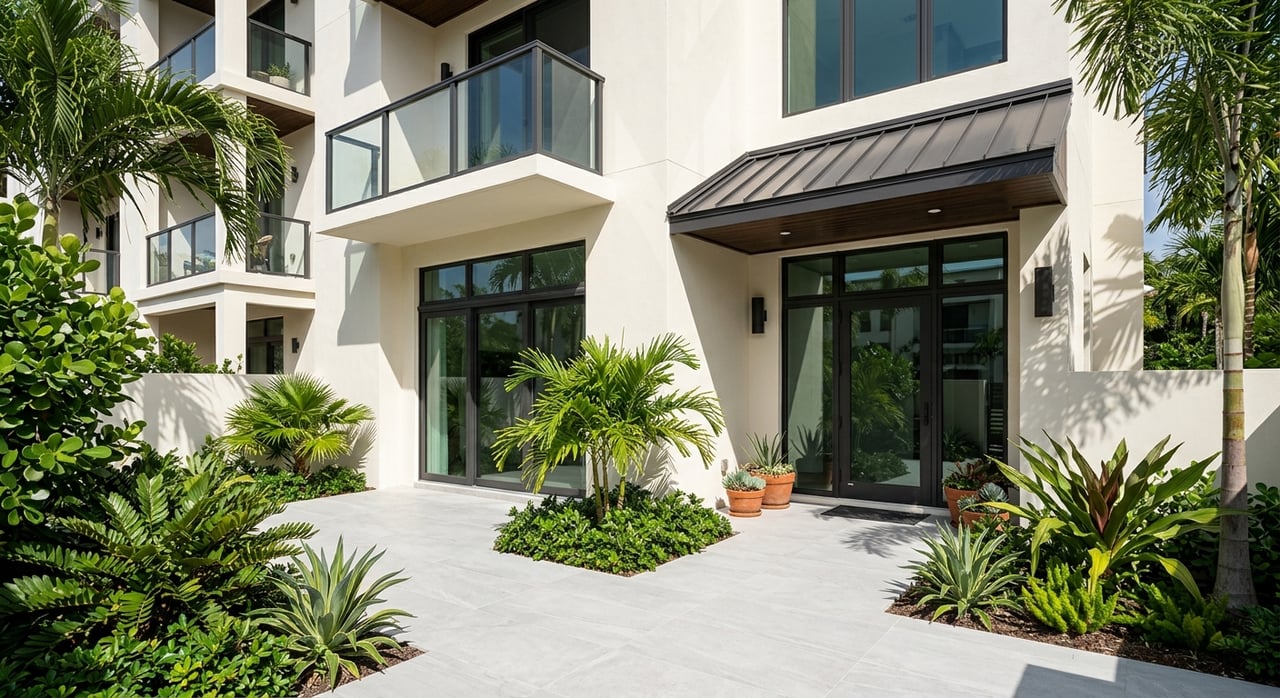
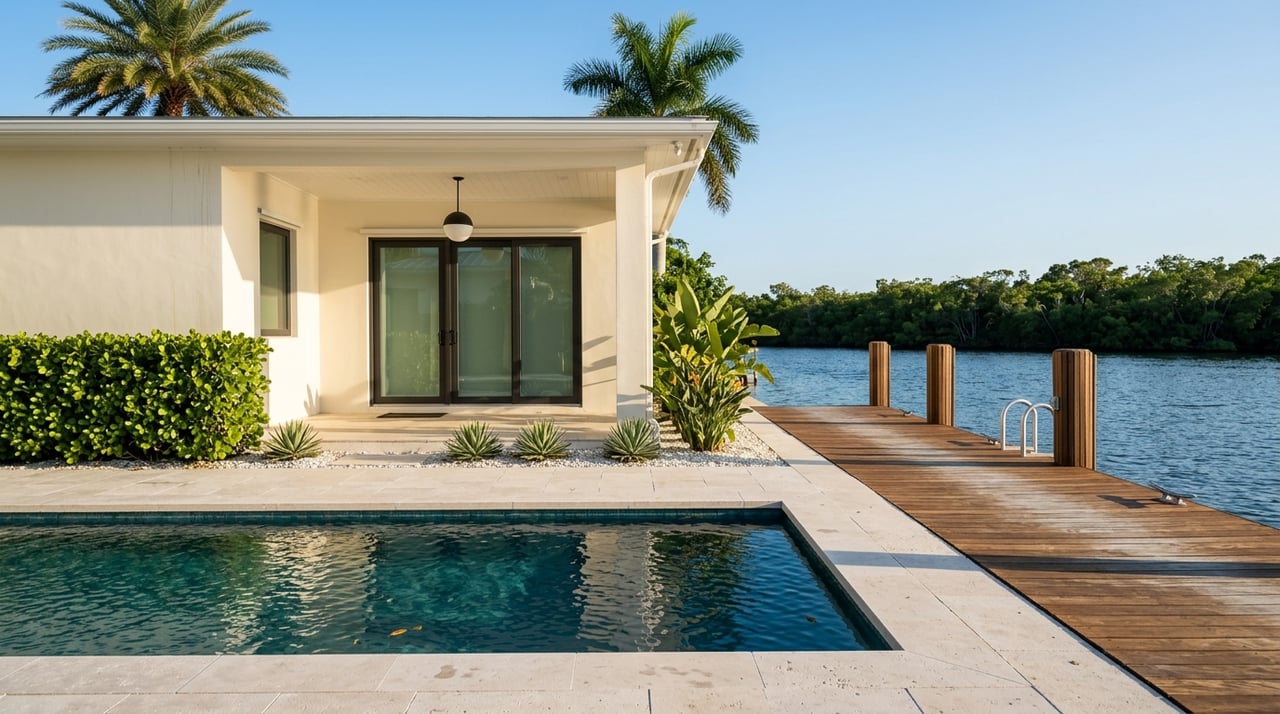
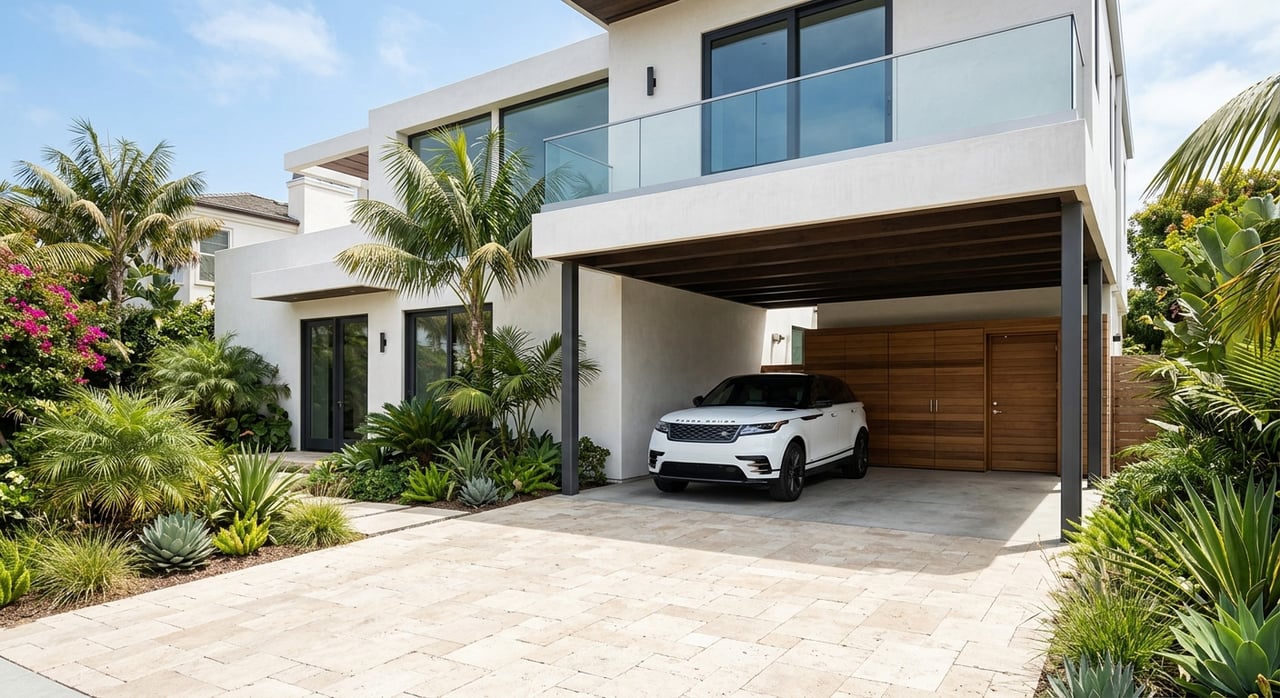
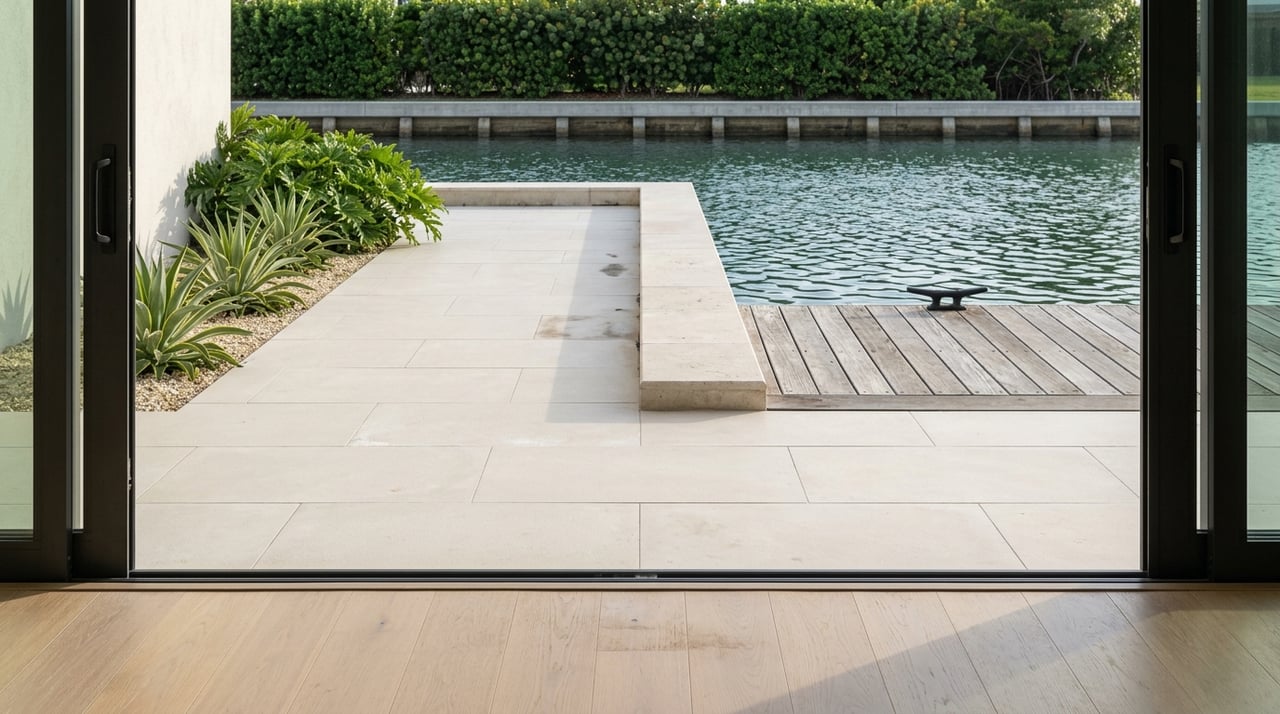
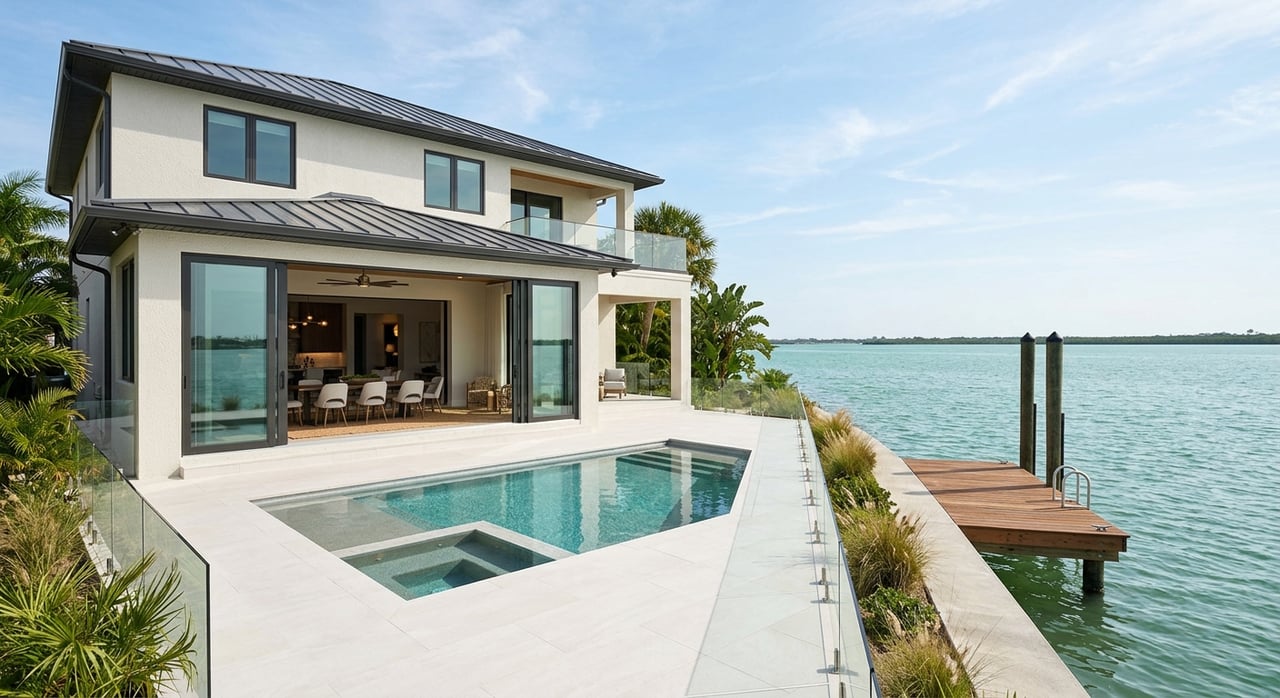
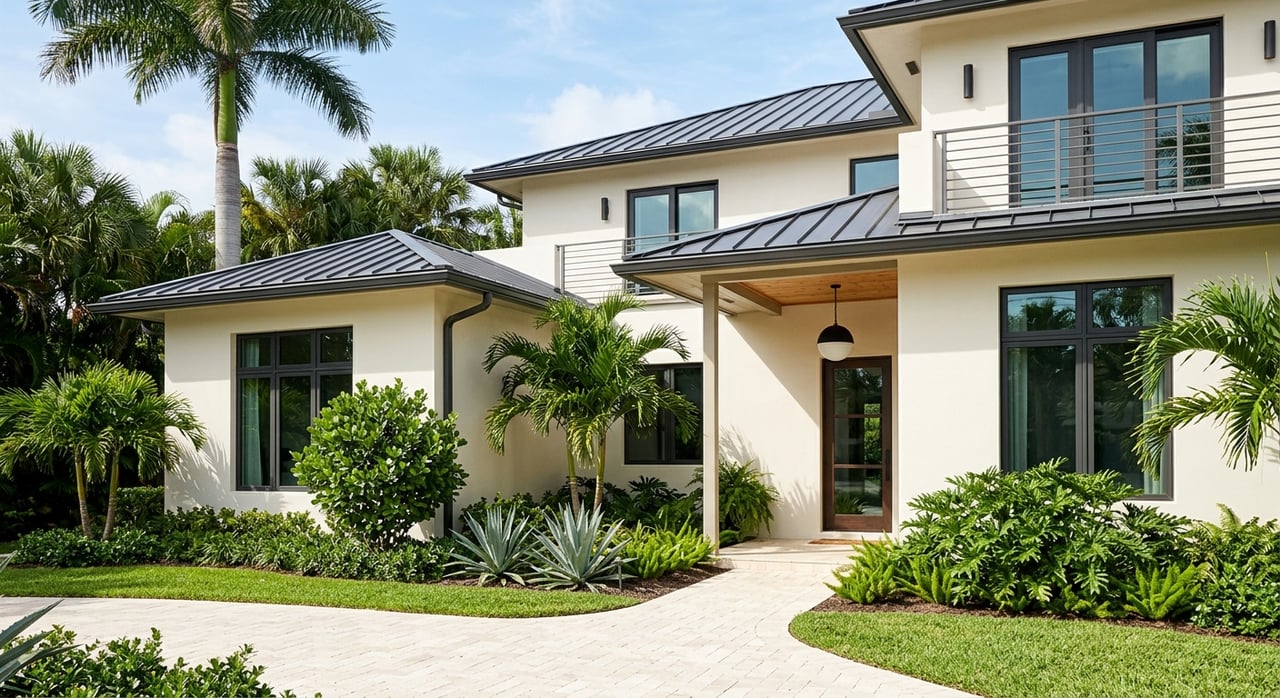
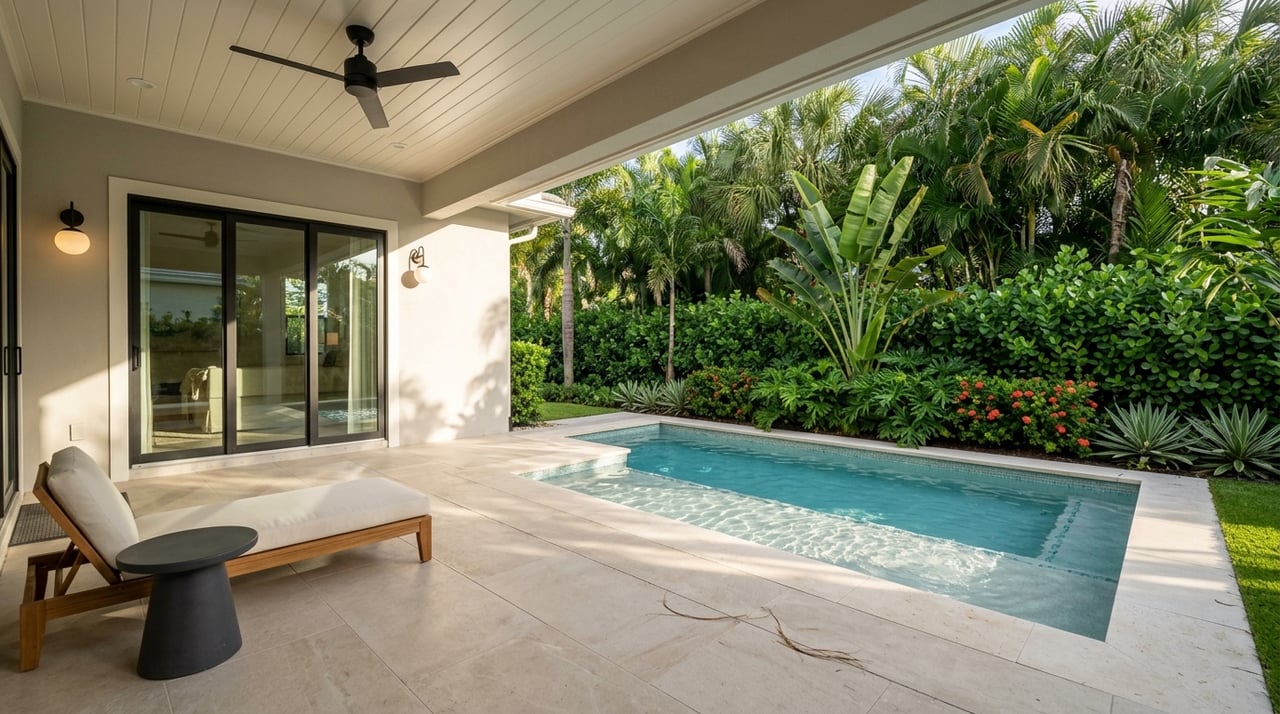
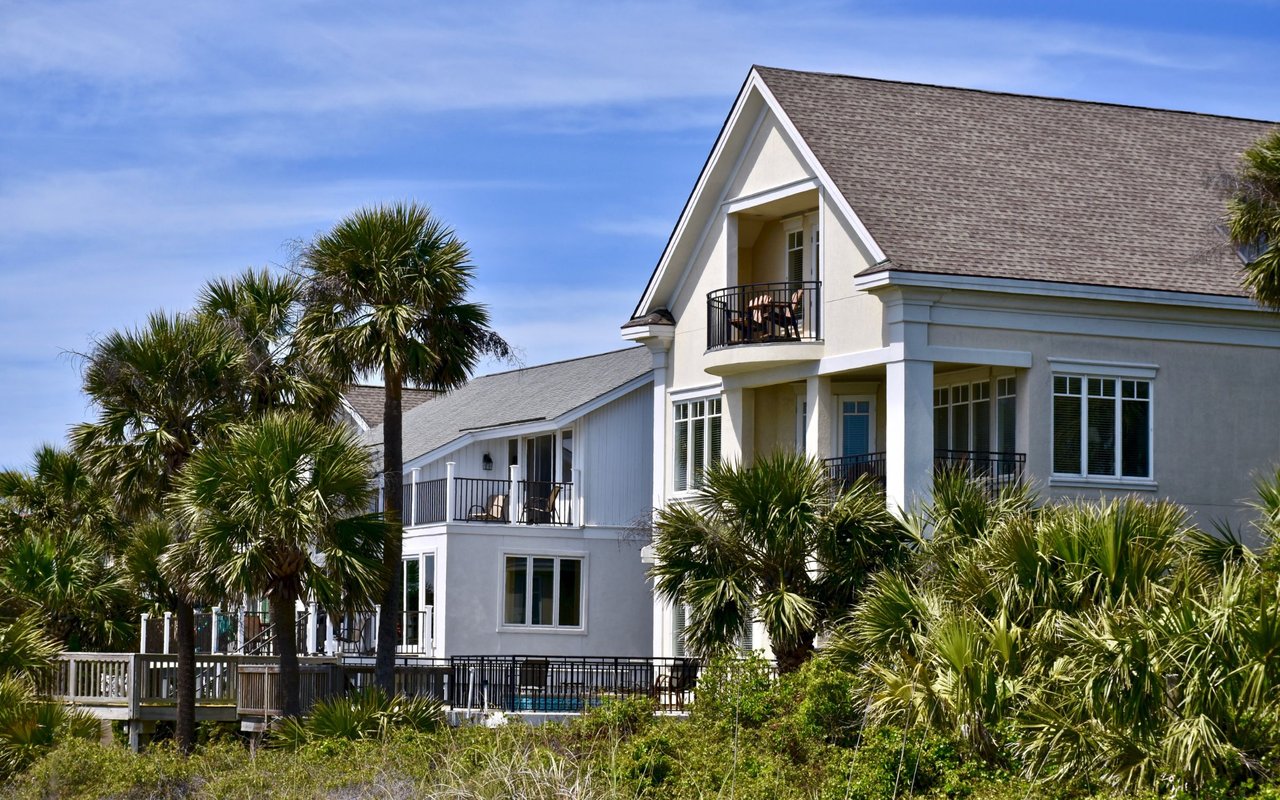
Architectural styles range from original 1960s and 70s old-Florida ranch homes — many of which are being razed or comprehensively renovated — to striking contemporary new construction with floor-to-ceiling glass, elevated living structures, and impact-rated systems that meet the specifications today's high-net-worth buyers demand. Many homes boast 100+ feet of water frontage with private docks capable of accommodating sailboats and large vessels.
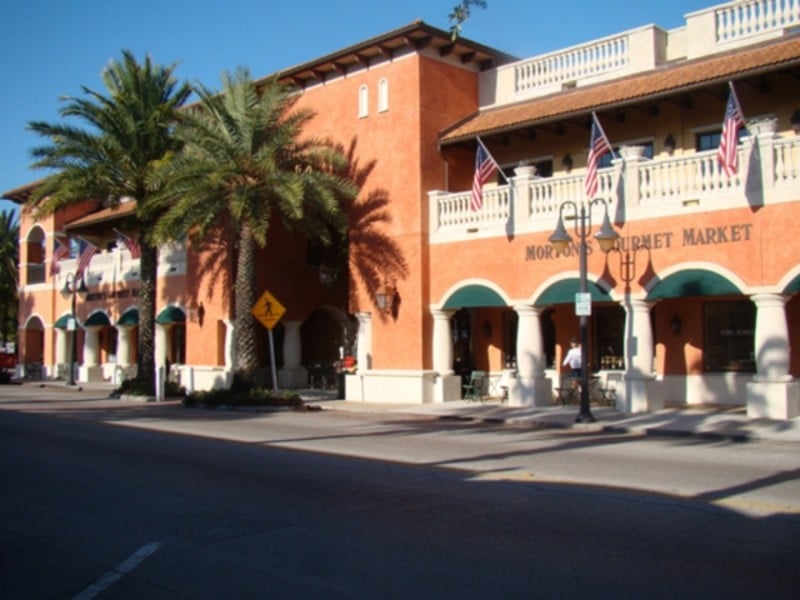
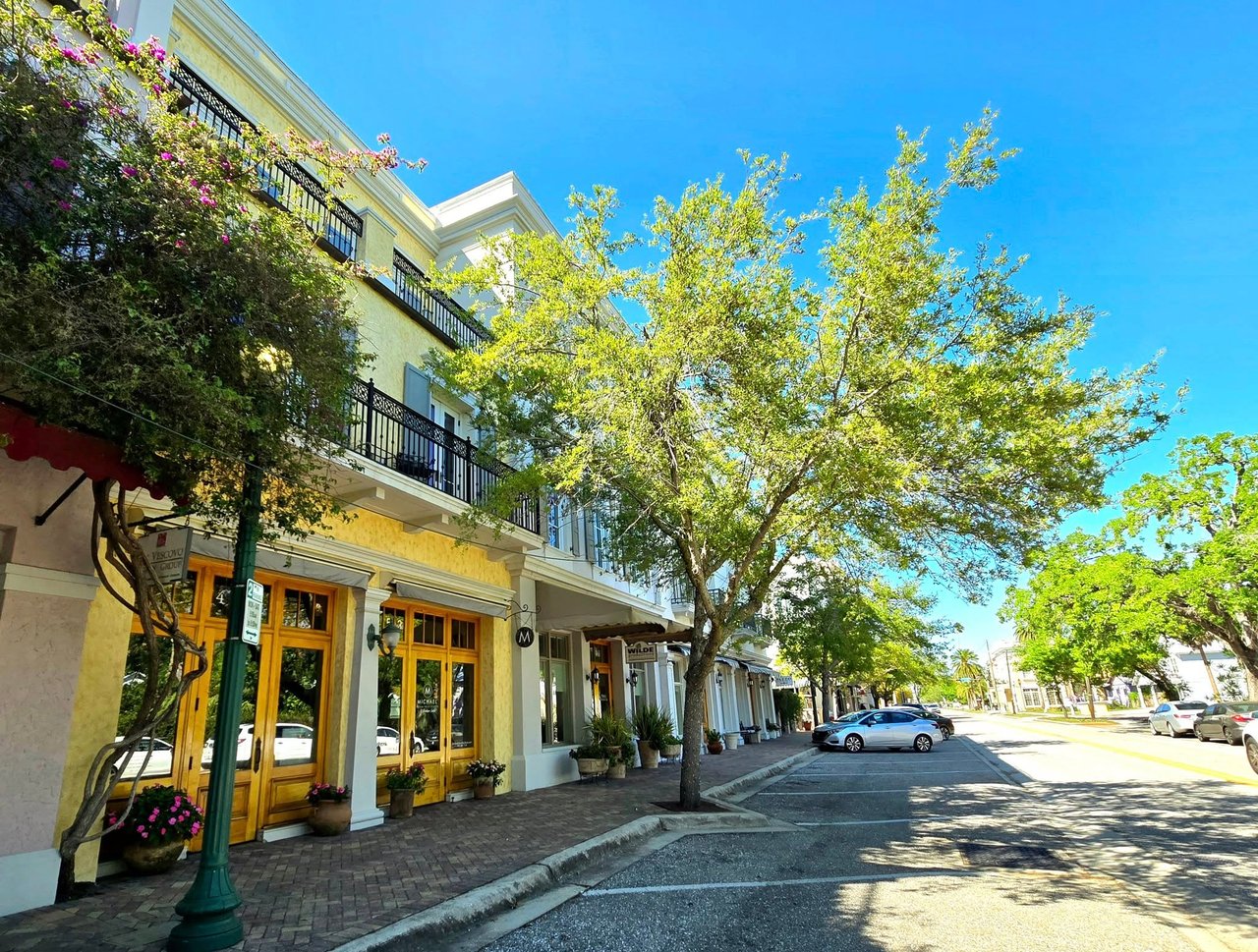
Southside Village isn't just a neighborhood — it's an entire lifestyle compressed into a walkable few blocks. Located along Osprey Avenue and Hillview Street, just behind Sarasota Memorial Hospital, it's Sarasota's oldest shopping district and the commercial heart of the West of Trail corridor. Park once and you won't need your car for the rest of the day.
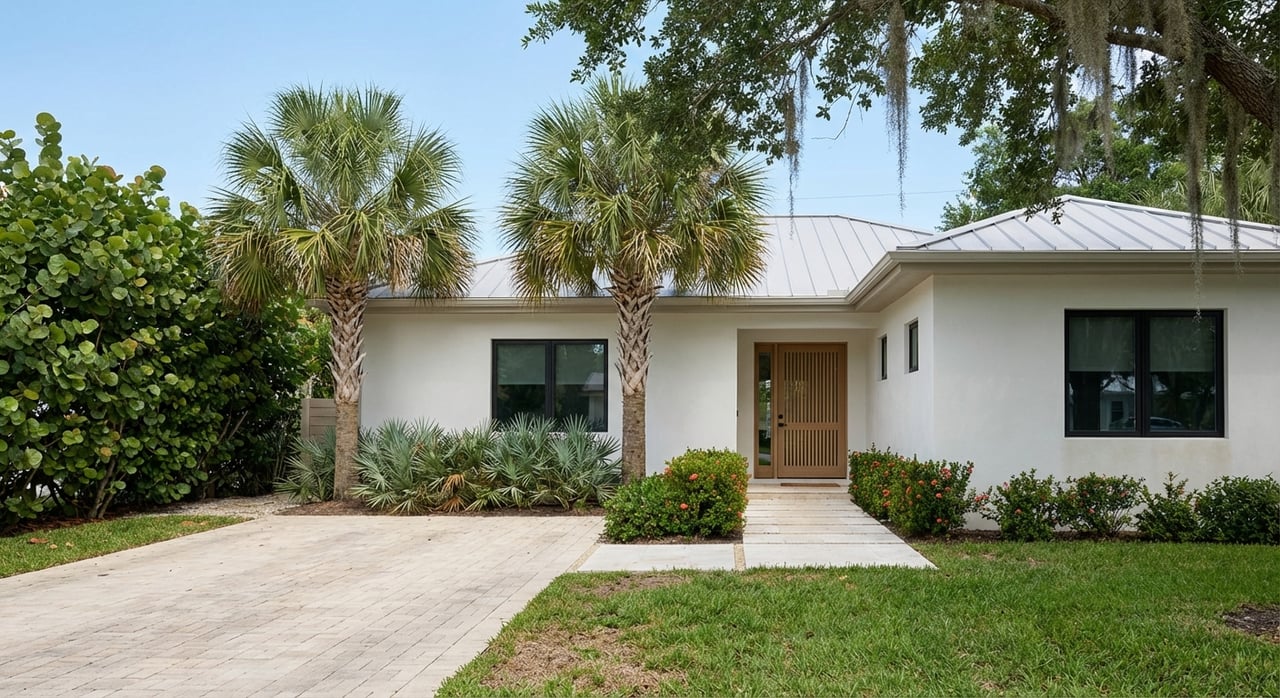
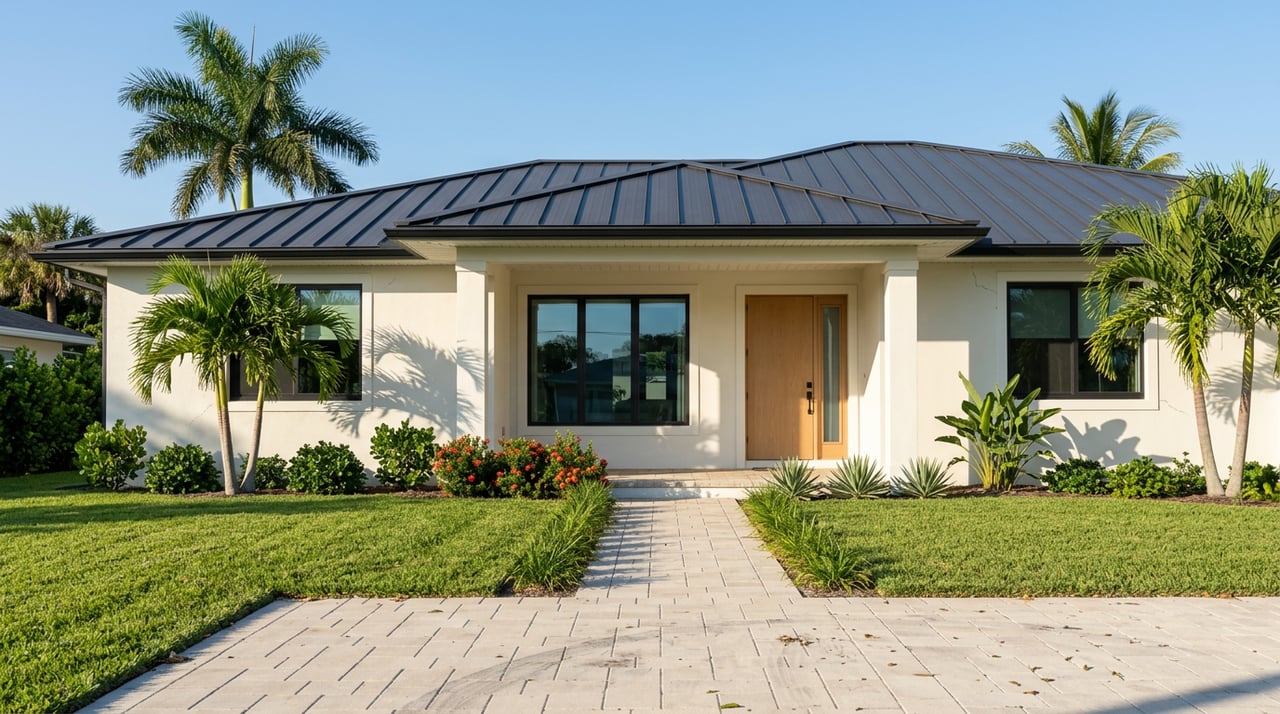
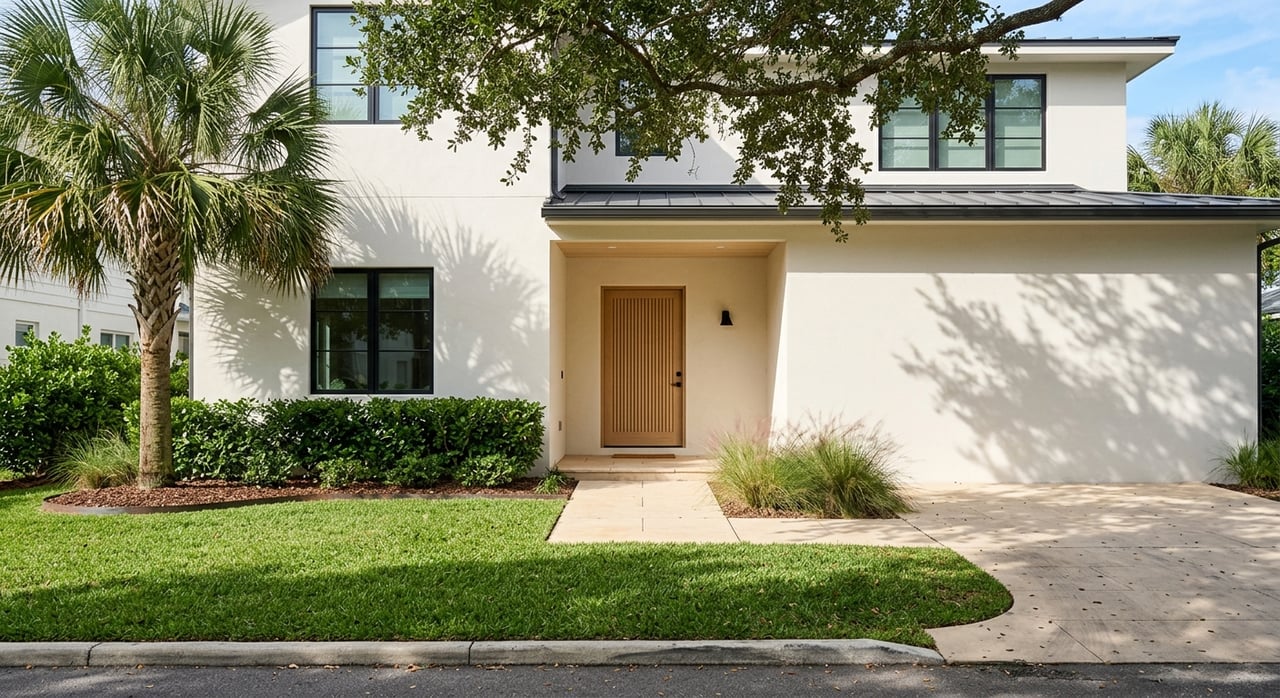
The residential streets surrounding the village feature an eclectic mix of Florida bungalows, mid-century homes, and modern infill construction — architectural diversity that gives each block its own character. Southside Elementary School, consistently one of Sarasota County's top-rated schools, sits within easy walking distance and remains one of the primary drivers of family demand in the area.
Restaurants & dining
Bars & nightlife
Shopping & daily life
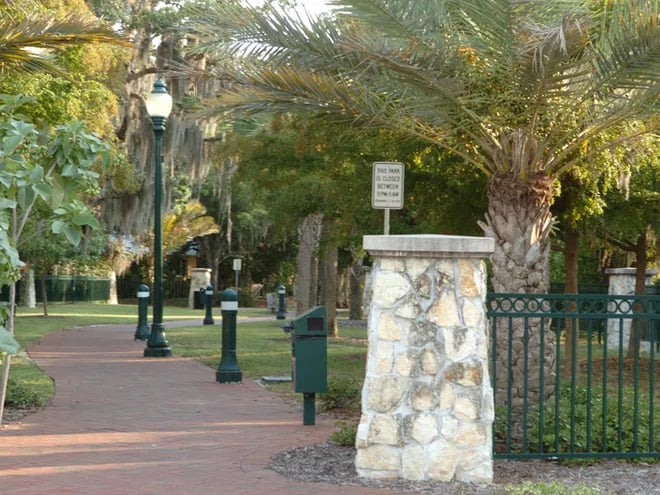
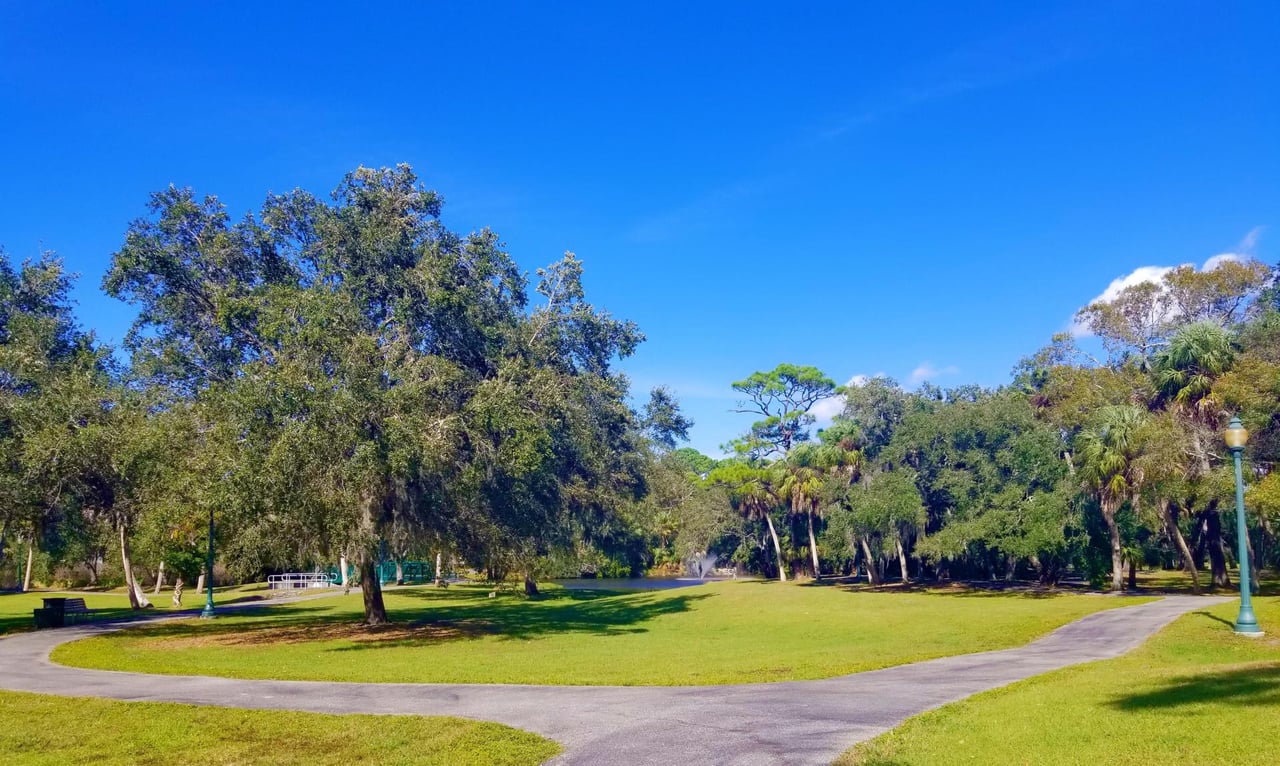
McClellan Park sits just west of Osprey Avenue in the heart of the West of Trail corridor — close enough to Southside Village to walk to Morton's for coffee, and close enough to downtown to make it in minutes. It's a 108-home historic neighborhood with the kind of architectural diversity that makes every street feel distinct from the last.
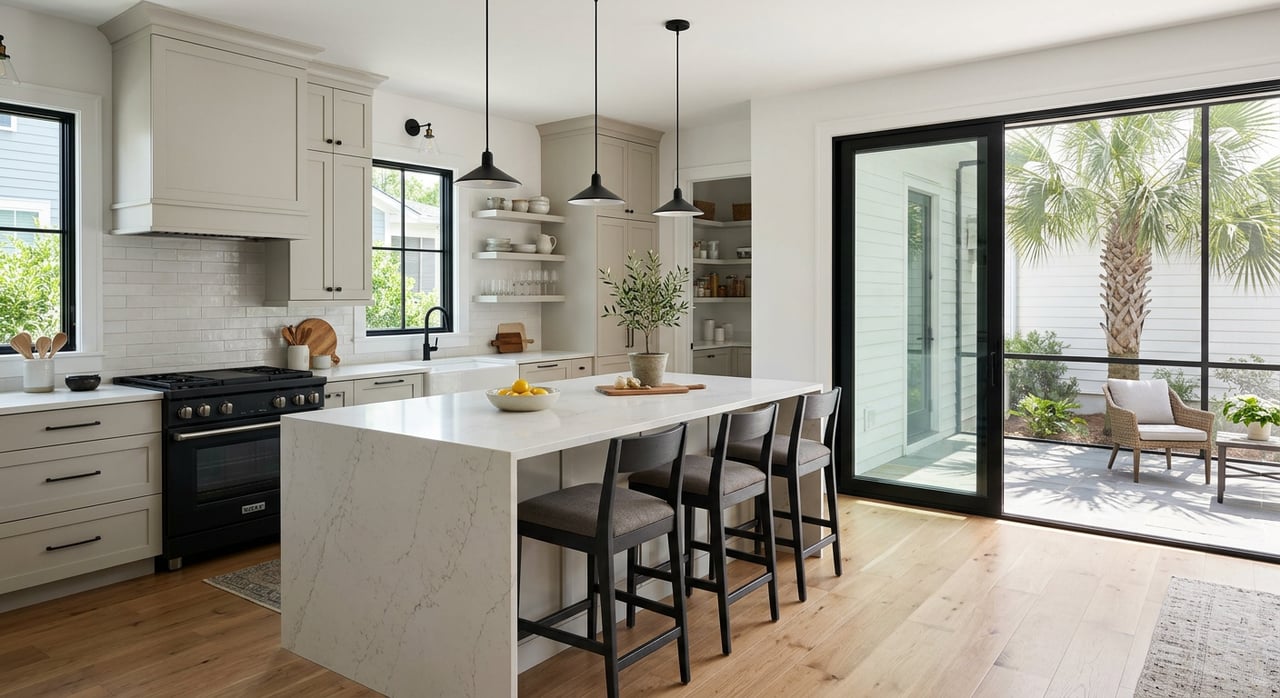
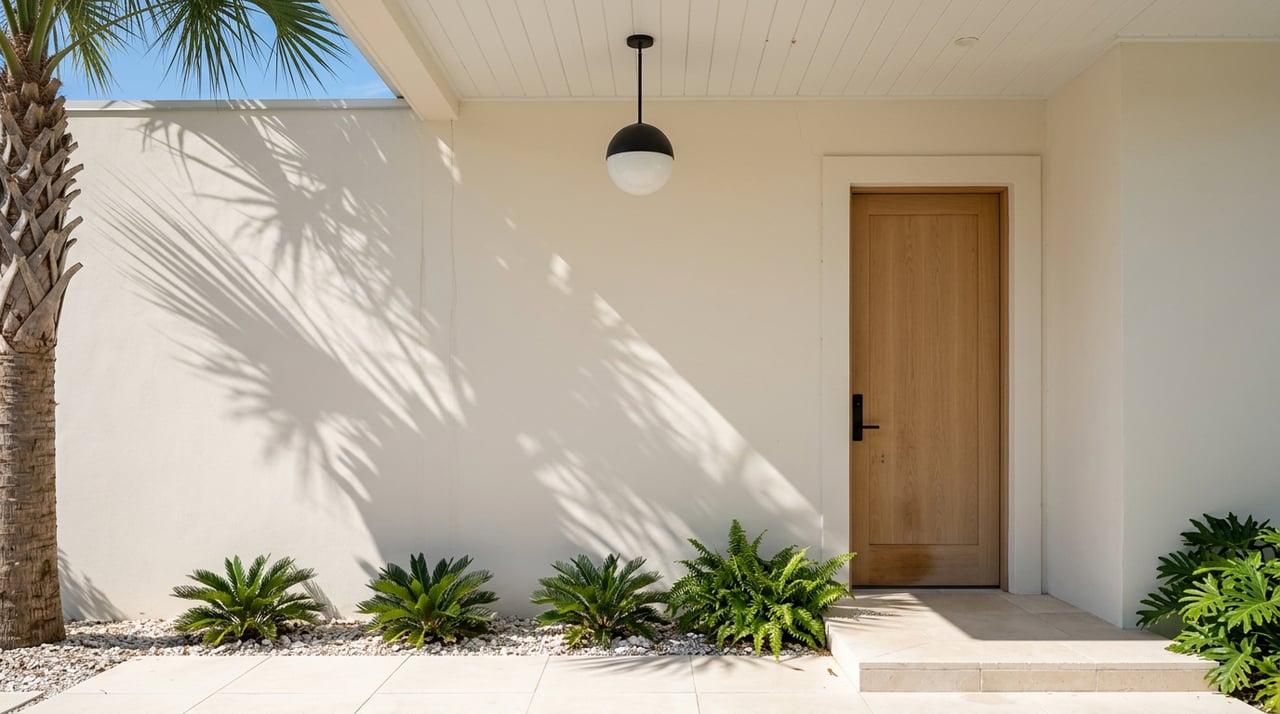
On any given block in McClellan Park you'll find original old-Florida cottages shoulder-to-shoulder with newly constructed modern mansions, preserved Mediterranean revival homes, and mid-century properties that have been comprehensively renovated by buyers who understood what these lots were worth before the market caught up. The architectural eclecticism isn't chaos — it's character, accumulated over nearly a century of Sarasota's evolution.
Current listings start around $1.65 million and climb from there, reflecting both the neighborhood's location premium and the quality of renovated and new construction product that's replaced much of the older inventory. There is no HOA — a feature residents cite consistently as one of the neighborhood's most underappreciated advantages. Proximity to Southside Elementary (A-rated), Sarasota Memorial Hospital, and Selby Gardens makes this one of the most practically located neighborhoods in the city.
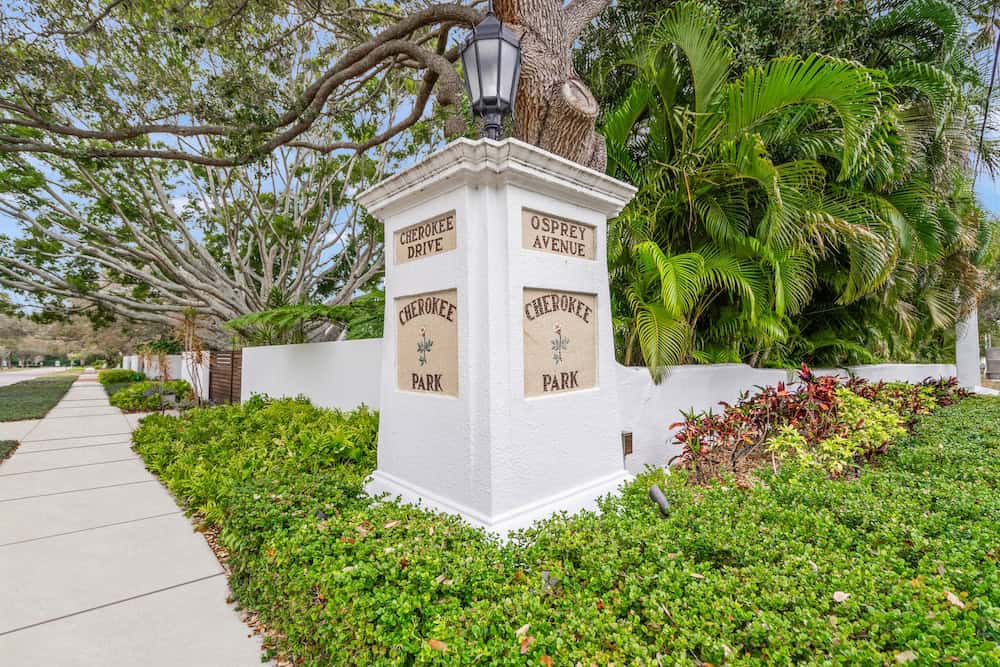
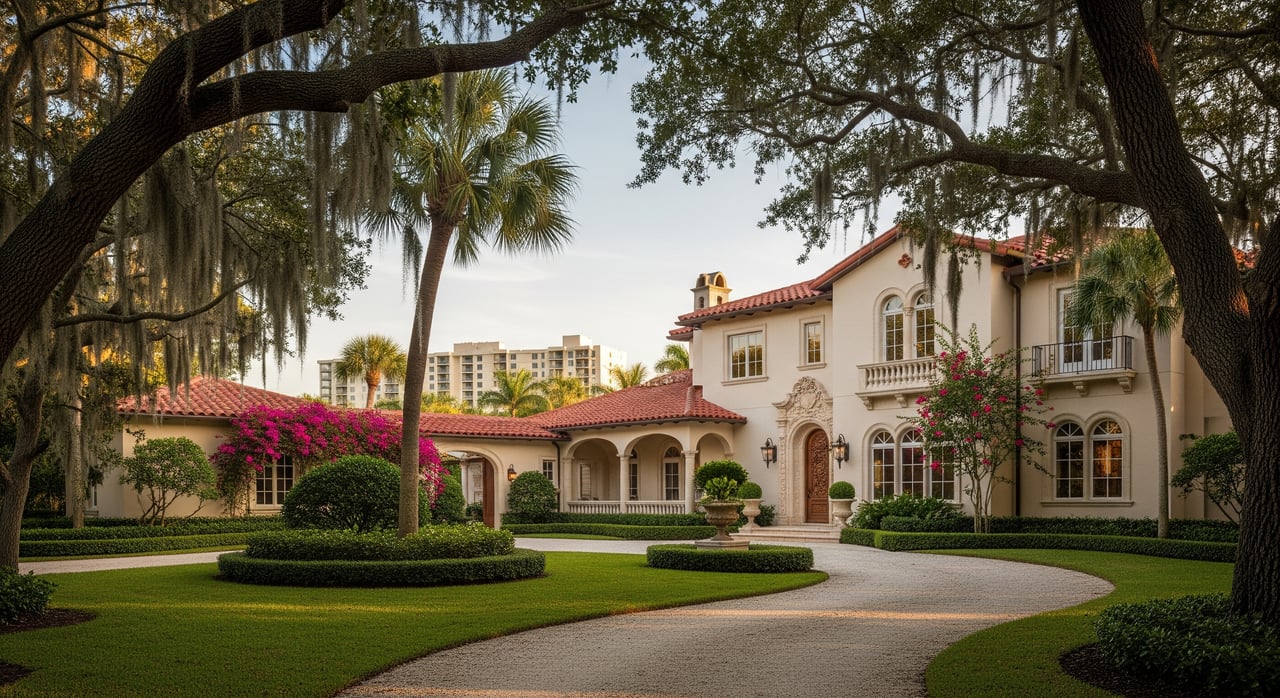
Cherokee Park is the architectural crown of West of the Trail. Established in the 1920s during Sarasota's land boom era, its streets were laid out with lot sizes that would be unthinkable in any modern development — ranging from a third of an acre to 1.6 acres within the city limits of Sarasota. The result is a neighborhood of spacious, private estates on canopy-covered streets that give it an unmistakable sense of permanence and prestige.
The 93 homes within Cherokee Park and its smaller Cherokee Lodge section represent virtually every architectural chapter of Sarasota's history: original 1920s Mediterranean revival estates, art deco properties, Sarasota School of Architecture modernist works, and contemporary new construction by some of the region's most accomplished custom builders. No two homes are the same — every property is its own story.
Current listings range from $2 million at the entry level to $13.25 million for the neighborhood's most significant bayfront and premier lot properties. Several parcels offer direct bayfront frontage with unobstructed views of Sarasota Bay — and crucially, Cherokee Park properties are widely located in Flood Zone X, meaning no mandatory flood insurance requirement. In a coastal market where flood insurance costs can run $8,000–$20,000+ annually, that designation carries significant financial value.
What makes West of the Trail different from everywhere else
The question buyers always ask is some version of: "Why does West of the Trail cost what it costs?" The answer isn't one thing — it's five things happening simultaneously that no amount of new development can replicate.
First, proximity. Downtown Sarasota, Sarasota Memorial Hospital, Selby Gardens, the Sarasota Farmers Market, and the bayfront are all minutes away — on foot for much of the area. Second, the Southside Elementary school zone, one of the few A-rated elementary schools in the city, consistently adds premium to family buyer demand. Third, the tree canopy — mature oaks and established landscaping that took decades to grow and can't be installed. Fourth, the absence of HOA governance in most neighborhoods, giving buyers genuine autonomy over their properties. Fifth, and most fundamentally, scarcity. The supply of West of Trail real estate is structurally fixed. It cannot expand. And it has been coveted for nearly a century.
That combination — walkability, schools, canopy, autonomy, and scarcity — is what drives the premium. And in 2026, with buyer leverage across the broader market creating opportunities to negotiate on the right properties, it's also what makes the area worth understanding before you search.
Interested in West of the Trail?
Whether you're buying into this market for the first time or selling an established property, West of the Trail requires street-by-street expertise. The LaMaida Group at Douglas Elliman knows this corridor and can help you navigate it with confidence.